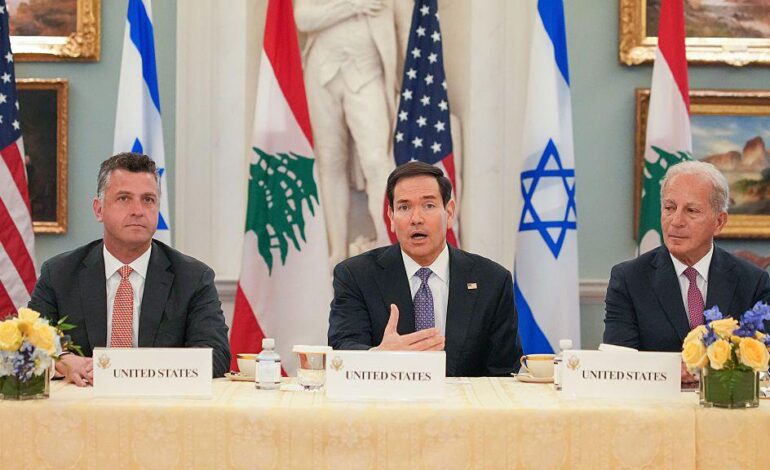
In a rare and significant diplomatic development, Israel and Lebanon held direct talks in Washington, DC amid the wider regional conflict involving Iran. The meeting marked the first face-to-face discussions between the two countries in decades and took place while tensions remain high across West Asia. The talks were hosted by the United States and are being viewed as an attempt to reduce conflict on Israel’s northern border and prevent further regional escalation.
First Direct Talks in Decades
The meeting represented the first high-level direct engagement between Israeli and Lebanese representatives since the early 1990s. Historically, the two countries have no formal diplomatic relations and have communicated mainly through mediators such as the United Nations or the United States. The Washington meeting therefore carried strong symbolic and strategic importance.
Hosted by the United States
U.S. Secretary of State Marco Rubio hosted the talks in Washington. The United States has been trying to calm multiple fronts of tension in the region, including the Iran war, Hezbollah-Israel clashes, and broader concerns over energy security and trade routes. U.S. officials described the talks as a historic opportunity, though they acknowledged that meaningful progress would take time.
Who Represented Both Sides
Lebanon was represented by Ambassador Nada Hamadeh Moawad, while Israel was represented by Ambassador Yechiel Leiter. Both envoys attended the discussions at the State Department and later signaled cautious willingness to continue dialogue.
Key Issues Discussed
Several sensitive issues were reportedly part of the agenda, including:
- A possible ceasefire on the Lebanon-Israel front
- Border security and military escalation
- Return of displaced civilians
- Humanitarian relief for affected Lebanese areas
- Hezbollah’s armed presence in southern Lebanon
- Long-term security arrangements
- Possibility of future direct negotiations
These issues remain deeply contested and no final agreement was announced.
Israel’s Position
Israeli officials reportedly maintained that any lasting arrangement must include the weakening or disarmament of Hezbollah. Israel also indicated that military pressure would continue until security guarantees are in place for northern Israeli communities affected by rocket attacks and border tensions.
Lebanon’s Position
Lebanon called for an immediate ceasefire, Israeli withdrawal from Lebanese territory, humanitarian relief, and the safe return of displaced people. Lebanese officials have also emphasized sovereignty and the need for any arrangement to respect international resolutions and Lebanon’s territorial integrity.
Hezbollah Opposes the Talks
Hezbollah reportedly rejected the Washington discussions and criticized negotiations with Israel. The group has remained a central factor in the conflict, and its position complicates any diplomatic breakthrough between the Lebanese state and Israel.
Why the Talks Matter Now
The timing is critical because the wider Iran war has increased fears of a multi-front regional conflict. Fighting involving Iran, Israel, U.S. forces, and allied groups has already disrupted markets and heightened security concerns. Direct Israel-Lebanon talks may help reduce one major front of tension.
No Immediate Breakthrough Yet
Although both delegations described the meeting as constructive, no formal peace framework or ceasefire deal was reached. Officials indicated this was only the beginning of a longer diplomatic process, with further meetings expected if momentum continues.
Regional and Global Impact
Any reduction in Israel-Lebanon tensions could help:
- Lower risk of wider Middle East war
- Improve shipping and market confidence
- Reduce humanitarian pressure in Lebanon
- Stabilize energy prices
- Support broader diplomacy involving Iran
Because the region is central to oil routes and global security, these talks are being watched worldwide.