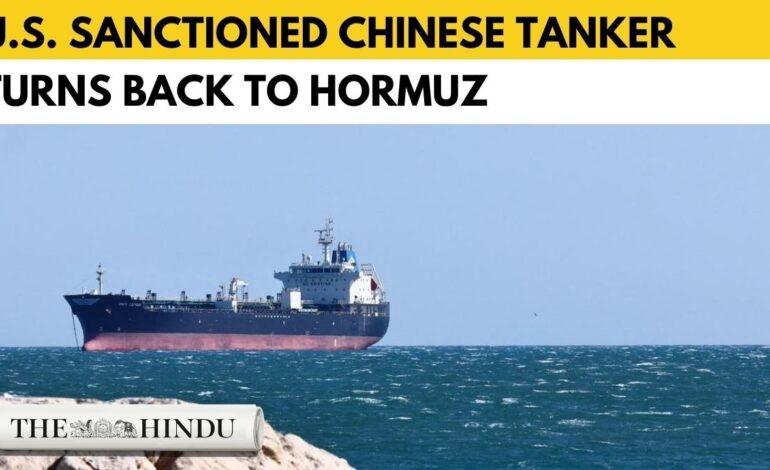
A tanker under U.S. sanctions reportedly failed to break through the American naval blockade around Iranian ports and turned back toward the Strait of Hormuz, highlighting the growing pressure on maritime trade in the Gulf region. The vessel, identified as Rich Starry, had attempted to leave the Gulf after earlier movements through the waterway but later reversed course, according to shipping data. The incident is being seen as one of the clearest early tests of the newly imposed U.S. blockade on Iran-linked shipping.
Tanker Rich Starry Reverses Course
The vessel Rich Starry, a Chinese-owned medium-range tanker, had exited the Gulf the previous day but later made its way back toward the Strait of Hormuz on Wednesday. Shipping trackers indicated the ship did not continue onward and instead returned after failing to pass the tightened U.S. maritime restrictions.
The tanker had reportedly been one of at least eight vessels moving through the waterway during the first full day of the blockade. Its reversal signaled that enforcement pressure in the region may be stronger than many traders expected.
Why the Ship Is Under Sanctions
The Rich Starry and its owner, Shanghai Xuanrun Shipping Co, were previously sanctioned by the United States for allegedly engaging in trade linked to Iran. Washington has increased pressure on ships, operators, and intermediaries accused of helping Iran bypass energy sanctions.
The ship is believed to be carrying around 250,000 barrels of methanol, loaded from the UAE port of Hamriyah, according to commodity tracking data cited in reports.
US Blockade Began After Failed Peace Talks
President Donald Trump announced the blockade after peace talks between the U.S. and Iran in Islamabad reportedly failed to reach an agreement. The blockade targets maritime traffic entering or leaving Iranian ports through the Gulf and Gulf of Oman. It is part of a broader strategy to pressure Tehran economically and strategically.
The U.S. military said the first 24 hours of the operation were effective, claiming no ships successfully crossed the restricted zone during that period.
Six Ships Already Turned Back
U.S. Central Command said six vessels had already complied with instructions from American naval forces to reverse course and re-enter Iranian ports or avoid the restricted area. Officials said these incidents occurred through radio communications without the need for boarding operations.
The Rich Starry was reported to be among those vessels affected by the blockade measures.
US Naval Forces Enforcing Maritime Pressure
Reports indicate the United States has deployed a major force to enforce the blockade, including:
- More than a dozen warships
- Thousands of military personnel
- Surveillance aircraft and drones
- Destroyers in the Gulf of Oman and Arabian Sea
American forces are reportedly operating outside the narrowest points of Hormuz while monitoring shipping lanes and stopping vessels linked to Iranian trade.
Strait of Hormuz Remains Critical to Global Trade
The Strait of Hormuz is one of the world’s most important energy chokepoints. Around 20% of global oil and LNG shipments normally pass through the route. Any disruption there can quickly affect fuel prices, shipping insurance costs, and global market sentiment.
The new blockade and vessel reversals have already raised concerns about long-term supply disruptions if the crisis continues.
China and Global Reactions
Because the Rich Starry is linked to China, the incident may also increase diplomatic tensions. China has criticized aggressive actions affecting commercial navigation and has called for de-escalation in the region. Other countries are closely watching whether neutral commercial shipping remains protected.
What Happens Next
Shipping companies may now become more cautious before entering Gulf waters linked to Iranian trade. Tankers could reroute, delay departures, or seek clearer military guidance before transiting the region. Energy traders are also monitoring whether more sanctioned vessels attempt similar passages.
If additional ships are turned back, the blockade could significantly reduce Iran’s seaborne exports and deepen economic pressure.