

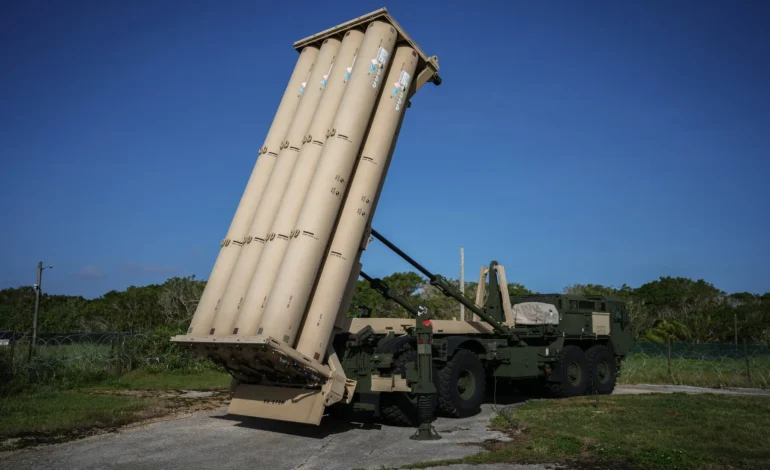
The ongoing conflict involving Iran and Israel has reportedly placed significant pressure on the United States’ advanced missile defense inventory. Recent reports suggest that the U.S. used a large number of high-end missile interceptors while helping defend Israel from Iranian missile and drone attacks during the regional conflict.
Defense analysts are now raising concerns about the long-term impact on America’s military readiness and strategic stockpiles, especially as tensions continue across the Middle East.
US Used Hundreds of Missile Interceptors During Conflict
According to reports, the United States launched:
- More than 200 THAAD interceptors
- Over 100 SM-3 and SM-6 naval interceptors
These systems were deployed to help intercept Iranian ballistic missiles and drones targeting Israel during the conflict.
The interceptors were reportedly fired from:
- U.S. THAAD systems stationed in the region
- American naval vessels positioned in the eastern Mediterranean Sea
Military officials believe the operation became one of the largest real-world uses of advanced U.S. missile defense systems in recent history.
What Is the THAAD Missile Defense System?
THAAD stands for Terminal High Altitude Area Defense.
The system is designed to:
- Intercept ballistic missiles
- Destroy incoming threats outside or inside Earth’s atmosphere
- Protect cities, military bases, and allies from missile attacks
THAAD is considered one of America’s most advanced missile defense technologies and plays a major role in U.S. global defense strategy.
Concerns Over Declining US Missile Stockpiles
Reports indicate that the scale of interceptor usage during the Iran-Israel conflict may have significantly reduced available missile defense inventories.
Some analysts estimate that nearly half of certain U.S. interceptor stockpiles may have been used during the operation.
This has sparked concerns regarding:
- Future military preparedness
- Ability to respond to simultaneous global conflicts
- Pressure on defense manufacturing
- Strategic commitments in Asia and Europe
Defense experts say replenishing advanced interceptor inventories could take years due to the complexity and cost of production.
Israel-Iran Conflict Intensified Regional Tensions
The conflict escalated sharply after coordinated military operations and retaliatory missile strikes spread across multiple regions in the Middle East.
Iran reportedly launched ballistic missiles, drones, and other attacks targeting:
- Israel
- U.S. military positions
- Allied regional assets
In response, American and allied missile defense systems were activated extensively.
The large-scale missile exchanges placed extraordinary pressure on air defense systems across the region.
US Navy Played Major Defensive Role
American naval forces stationed in the Mediterranean reportedly played a crucial role during the conflict.
Warships equipped with:
- Standard Missile-3 (SM-3) interceptors
- Standard Missile-6 (SM-6) systems
were heavily involved in intercepting incoming threats aimed at Israel and nearby strategic areas.
The operation demonstrated the growing importance of naval missile defense systems in modern warfare.
Growing Concerns Among US Allies
Reports suggest countries such as:
- Japan
- South Korea
are closely monitoring the situation because they also rely heavily on U.S. missile defense support in the Indo-Pacific region.
Defense analysts warn that reduced interceptor inventories could affect America’s ability to respond quickly in multiple global hotspots simultaneously.
Missile Defense Becoming Increasingly Important
Modern conflicts are placing greater emphasis on:
- Missile interception systems
- Drone defense technology
- Air defense shields
- Multi-layered protection systems
The Iran-Israel conflict highlighted how rapidly advanced interceptor stockpiles can be consumed during sustained attacks.
Military experts believe future wars may increasingly focus on:
- Drone swarms
- Ballistic missile attacks
- Air defense saturation strategies
Defense Manufacturing Under Pressure
The reported depletion of missile inventories is expected to increase pressure on U.S. defense manufacturers.
Companies producing:
- THAAD interceptors
- Patriot missiles
- SM-series interceptors
- Cruise missile systems
may face increased production demands in the coming years.
However, manufacturing advanced missile systems is expensive and time-consuming because of:
- Complex electronics
- Precision engineering
- Limited production capacity
Pentagon Monitoring Global Readiness
U.S. defense officials are reportedly reviewing:
- Missile inventory levels
- Production timelines
- Strategic reserve requirements
- Future deployment planning
The Pentagon is expected to prioritize rebuilding key missile defense reserves while maintaining operational readiness in other regions.
Iran Conflict Demonstrates Modern Warfare Challenges
The conflict also revealed how modern warfare increasingly depends on expensive defensive technologies.
A single advanced interceptor missile can cost millions of dollars, while drones and lower-cost offensive systems may be deployed in large numbers.
This imbalance has raised new questions regarding:
- Sustainability of missile defense systems
- Cost efficiency in warfare
- Long-term military logistics
- Strategic defense planning
Global Security Experts Raise Strategic Questions
Security experts believe the conflict may influence future defense strategies globally.
Countries are likely to invest more heavily in:
- Missile defense networks
- Hypersonic interception systems
- AI-powered air defense
- Early warning radar systems
The war also highlighted how quickly regional conflicts can create worldwide military and geopolitical consequences.
The United States’ extensive use of missile defense systems during the Iran-Israel conflict has reportedly placed considerable strain on its advanced interceptor stockpiles.
With more than 200 THAAD interceptors and over 100 naval missile interceptors reportedly used during defensive operations, concerns are growing about long-term military readiness and replenishment challenges.
As global tensions continue evolving, the conflict has reinforced the critical importance of missile defense technology in modern warfare and highlighted the growing strategic challenges facing major military power





1 Comment
[…] oil prices gave up their early advance after Iran’s foreign ministry indicated that renewed negotiations with the United States remain possible, offering […]