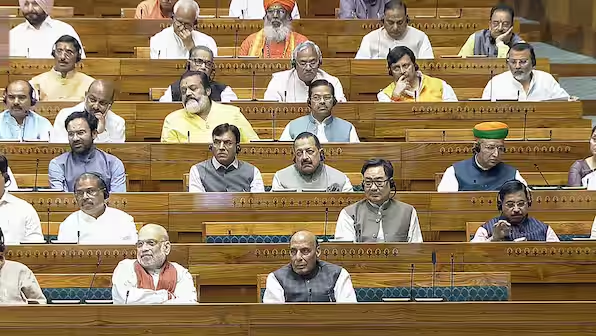
India’s long-pending demand for greater political representation of women has once again moved to the center of national politics. The proposed Women’s Reservation Bill, which seeks to reserve 33% of seats in the Lok Sabha and State Assemblies for women, is being seen as a landmark reform. But beyond symbolism, one key question dominates Parliament: Does the government have enough numbers to pass it?
What the Bill Proposes
The legislation aims to guarantee one-third representation for women in elected legislative bodies. Supporters say it would be a historic step toward gender equality and stronger democratic participation. Critics, however, are debating timing, implementation, and its connection with future delimitation exercises.
Why Numbers Matter
Since the proposal requires a Constitutional Amendment, it cannot be passed through a simple majority. The Bill needs:
- Support of at least two-thirds of members present and voting
- This number must also be not less than half of the total House strength
That means the government needs broad support from allies and opposition parties.
Lok Sabha: Government Needs Extra Support
In the Lok Sabha, the current numbers indicate:
- NDA alliance: 293 seats
- Non-NDA bloc: 241 seats
- Independents: 7 seats
- Approximate threshold required if full attendance: 360 votes
This means the ruling alliance is well short of the required mark on its own. Even with independents, it would still need backing from opposition parties.
Rajya Sabha: Better Position, But Still Not Automatic
In the Rajya Sabha:
- NDA bloc: 145 members
- Opposition bloc: 94 members
The Upper House numbers place the government in a stronger position compared to the Lok Sabha, but consensus politics still remains important for a smooth passage.
Opposition’s Dilemma
Many opposition parties publicly support women’s political empowerment. However, they have raised concerns such as:
- Demand for OBC quota within women’s reservation
- Linking implementation with delimitation
- Regional concerns over seat redistribution after future census exercises
This creates a political challenge: oppose the Bill and risk backlash, or support it while criticizing the government’s design.
Why This Bill Is Politically Significant
If passed, the Women’s Reservation Bill could reshape India’s political landscape by increasing female participation in lawmaking and candidate selection. It may also force political parties to build stronger women leadership pipelines at grassroots and national levels.
For the ruling government, it offers a major reform narrative. For the opposition, it becomes difficult to reject openly.
Final Verdict: Do Numbers Add Up?
Not by itself. The ruling alliance does not appear to have enough numbers in the Lok Sabha to pass the amendment alone. But because women’s reservation enjoys wide public support, the government may still secure passage through cross-party backing.
In short, the arithmetic is tight—but the politics may favor the Bill.