A fresh political confrontation has erupted after the Congress sharply criticized the Centre’s newly introduced bills linked to women’s reservation and delimitation. The opposition party alleged that the real objective of the proposed laws is not women’s empowerment, but a wider political restructuring that could benefit the ruling party.
What Triggered the Controversy?
The government has listed three major bills in the Lok Sabha, including:
- A Constitutional Amendment Bill linked to implementing women’s reservation
- The Delimitation Bill, 2026
- Amendments concerning Union Territories laws
These proposals are being discussed as part of preparations for implementing 33% reservation for women in Parliament and Assemblies before the 2029 elections.
Congress’s Main Charge
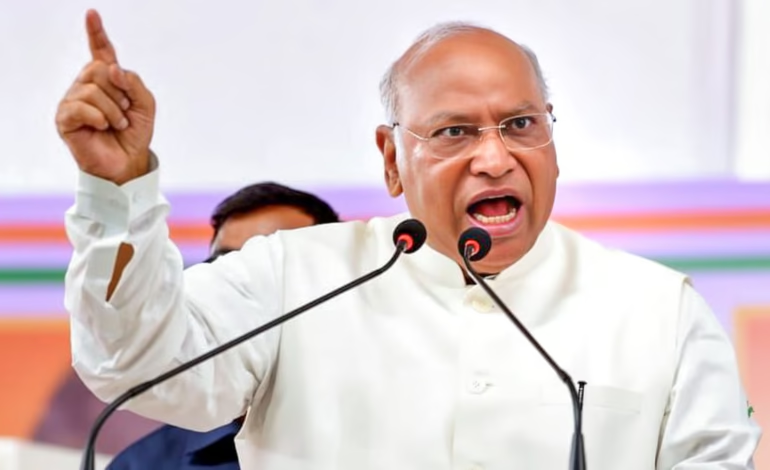
Senior Congress leader Jairam Ramesh said the bills are being marketed as women’s reservation reforms, but the core issue is delimitation and redistribution of parliamentary seats.
According to Congress, the proposals could increase political advantage for states where the BJP is electorally stronger, while reducing the relative influence of some other states.
Why Delimitation Is Sensitive
Delimitation means redrawing constituency boundaries and reallocating seats based on population changes. The government has proposed increasing Lok Sabha seats from 543 to as many as 850.
This has sparked concern, especially in southern states, where leaders argue that states which controlled population growth may lose relative representation in Parliament.
Congress’s Alternative Proposal
The Congress said if the aim is genuine empowerment, the government should immediately reserve one-third of the current Lok Sabha strength of 543 seats for women, along with reservation for women from SC, ST, and OBC communities.
Government’s Position
The Centre says the reforms are intended to operationalise women’s reservation and ensure updated democratic representation after population shifts. Prime Minister Narendra Modi has urged parties to support the move unanimously.
Why This Matters Politically
This debate goes beyond women’s reservation. It is also about:
- Balance of power between states
- North vs South representation concerns
- Electoral calculations before 2029
- Federal structure and constitutional fairness
Final Analysis
The Congress calling the bills “mischievous” reflects how politically explosive the issue has become. While the government presents the move as historic reform, the opposition sees it as a strategic power shift. The final outcome could reshape both representation and national politics for years ahead.