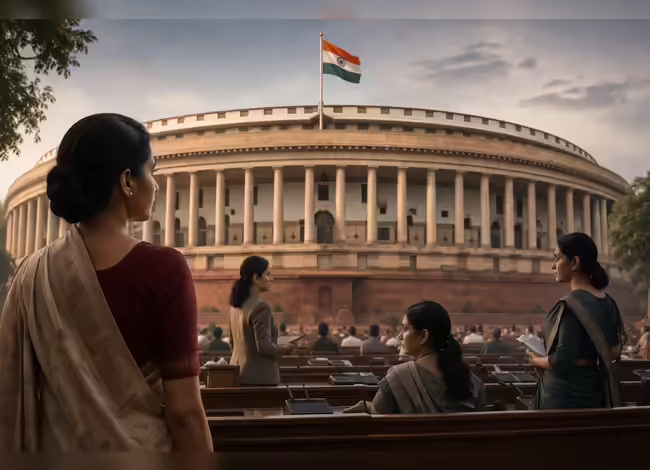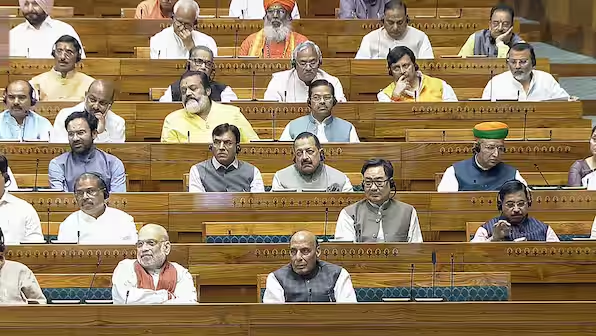
A major political debate has erupted after Union Home Minister Amit Shah introduced the Delimitation Bill, 2026 in the Lok Sabha. The proposed law seeks to redraw parliamentary and assembly constituencies and expand the number of seats, but it has already sparked fierce protests from opposition parties—especially leaders from southern states.
What Is the Delimitation Bill?
Delimitation is the process of redrawing electoral boundaries so that constituencies reflect population changes. The new bill proposes:
- Redrawing Lok Sabha and Assembly constituencies
- Increasing the total number of seats to match population growth
- Using census data to rebalance representation across states
- Improving population-to-representative ratios
The current Lok Sabha has 543 seats, but proposals suggest expansion to as many as 850 seats.
Why Is It Controversial?
The biggest opposition comes from southern states such as Tamil Nadu, Kerala, Karnataka, and Andhra Pradesh. Their leaders argue that states which successfully controlled population growth may lose relative political influence, while more populous northern states could gain more seats.
Critics say this may punish states that invested in education, healthcare, and family planning.
Opposition’s Main Arguments
Several INDIA bloc parties have announced resistance to the bill. Their concerns include:
- Reduction in southern states’ share of seats
- Possible political advantage to the ruling party
- Fear of gerrymandering through boundary redrawing
- Lack of wider consultation before introducing the bill
Some leaders have described the formula as “politically motivated.”
Government’s Stand
The government says delimitation is a constitutional necessity and aims to ensure equal democratic representation as India’s population changes over time. Supporters argue that fast-growing regions deserve proportionate voice in Parliament.
Link With Women’s Reservation Bill
The Delimitation Bill is also tied to the implementation of the Women’s Reservation framework, because reserved seats may be allocated after the new seat structure is finalized. This has made the current Parliament session even more politically significant.
Why This Matters
If passed, the bill could become the largest restructuring of India’s electoral map in decades. It may change:
- Number of MPs in Parliament
- State-wise political influence
- Future coalition equations
- Representation of women and reserved categories
Conclusion
The Delimitation Bill is not just about redrawing maps—it is about redrawing political power in India. While the government frames it as democratic reform, opposition parties see it as a shift in federal balance. With emotions high across regions, the coming debate in Parliament could shape Indian politics for years to come.