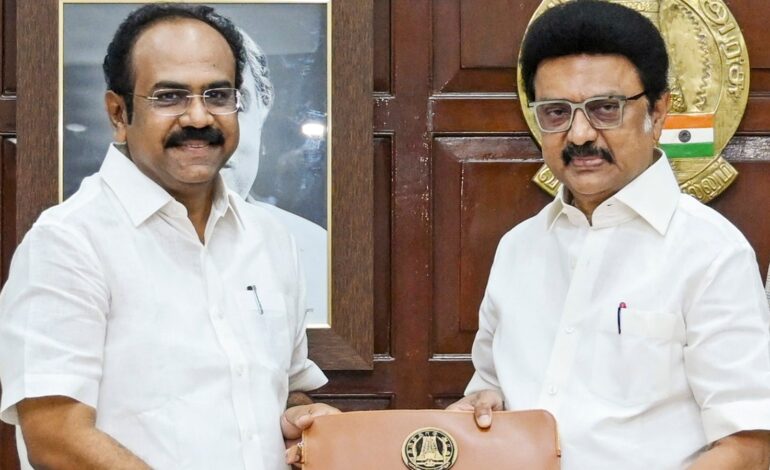
A detailed analysis published by The Hindu has raised concerns over what it describes as selective political reporting regarding the financial condition of Tamil Nadu. The article argues that public discussions around the State’s finances are often shaped by incomplete comparisons, politically convenient narratives, and selective use of debt figures without proper economic context. It says such reporting can mislead citizens and distort the real picture of Tamil Nadu’s fiscal health.
Why Tamil Nadu’s Finances Are in Debate
Tamil Nadu has frequently come under political criticism over:
- Rising public debt
- Fiscal deficit levels
- Borrowing for welfare schemes
- Revenue stress
- State vs Centre funding disputes
Opposition parties often use gross debt numbers to claim financial mismanagement, while the ruling establishment argues that debt must be viewed relative to economic size, investment needs, and developmental spending.
Debt Numbers Alone Do Not Tell the Full Story
The article reportedly emphasizes that quoting only total debt without comparing it to Gross State Domestic Product (GSDP) creates a misleading narrative. Large and economically advanced states naturally carry larger absolute debt because they also have larger economies, higher spending responsibilities, and bigger infrastructure programs.
Tamil Nadu is among India’s largest state economies, so raw debt numbers without proportional context may exaggerate the situation.
Tamil Nadu’s Strong Economic Base
Tamil Nadu remains one of India’s most industrialized and diversified state economies, supported by:
- Manufacturing hubs
- Automobile production
- Electronics exports
- IT and services sector
- Ports and logistics
- Strong urban tax base
Because of this broad economy, the state has significant revenue-generation capacity compared with many smaller states. Analysts often say fiscal strength should be judged not only by debt, but by repayment capacity and economic productivity.
Welfare Spending vs Fiscal Stress
Tamil Nadu is known for social welfare schemes in areas such as:
- Public health
- Education
- Food security
- Transport subsidies
- Women and family welfare
- Social justice programs
Supporters argue such spending improves long-term human capital and economic inclusion. Critics say subsidies and welfare commitments increase pressure on budgets. The article suggests this debate is often simplified into politics instead of evidence-based fiscal analysis.
Selective Comparison With Other States
Another concern raised is that some political commentary compares Tamil Nadu only with better-looking data points while ignoring:
- Higher debt states
- Differences in population size
- Different tax bases
- Different industrial structures
- Historical liabilities inherited from past governments
This selective benchmarking can create unfair narratives rather than balanced comparisons.
Centre-State Financial Tensions
Tamil Nadu has also repeatedly raised issues around:
- GST compensation concerns
- Tax devolution formulas
- Central grant allocation
- Borrowing limits imposed on states
- Federal fiscal autonomy
The article suggests that any serious review of Tamil Nadu’s finances must include the broader national fiscal framework, not only state-level borrowing headlines.
What Responsible Financial Reporting Should Include
Experts say fair reporting on state finances should examine:
- Debt-to-GSDP ratio
- Revenue deficit trends
- Capital expenditure quality
- Tax collection growth
- Welfare outcomes
- Infrastructure returns
- Borrowing sustainability
- Comparison with peer states
Without these metrics, political debate may become more about headlines than economics.
Why This Matters
Financial narratives influence:
- Investor confidence
- Credit perception
- Public trust
- Election debates
- Policy decisions
- Centre-state relations
If reporting is selective or incomplete, voters may misunderstand the true condition of a state economy.
Conclusion
The debate over Tamil Nadu’s finances reflects a larger issue in Indian politics: whether economic data is being used for honest analysis or partisan messaging. The Hindu’s commentary argues that selective political reporting can distort public understanding by focusing only on headline debt numbers while ignoring economic scale, revenue capacity, and development outcomes. A balanced view of Tamil Nadu’s finances requires context, comparison, and facts—not just political slogans.