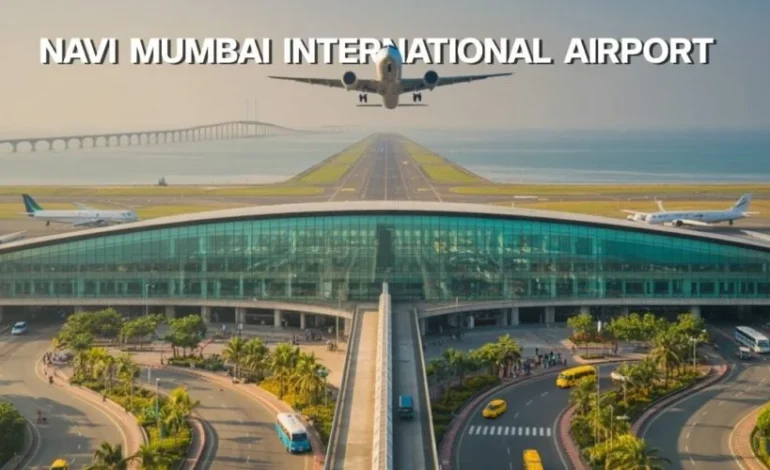
Navi Mumbai International Airport (NMIA) has achieved a remarkable milestone by becoming the 9th busiest domestic airport in India within just four months of beginning commercial operations. The airport, which started passenger flights on December 25, 2025, has rapidly emerged as a major aviation hub, reflecting strong travel demand in the Mumbai Metropolitan Region and the urgent need for additional airport capacity.
Fastest Rise Among India’s New Airports
According to aviation data cited in reports, NMIA recorded 393,819 domestic departing seats in April 2026, enough to place it among India’s top 10 busiest airports. This rapid growth is especially notable because the airport is still in its early operational phase.
For comparison, many airports take years to build traffic volumes at this scale, but Navi Mumbai has achieved it in months due to the enormous passenger demand from the Mumbai region.
Why Navi Mumbai Airport Grew So Quickly
Several reasons explain NMIA’s immediate success:
1. Mumbai Needed a Second Major Airport
Mumbai’s main airport, Chhatrapati Shivaji Maharaj International Airport (CSMIA), has long faced congestion and limited expansion capacity. NMIA was built to share the growing passenger load and improve efficiency across the region.
2. Strong Airline Expansion
Airlines quickly expanded operations at NMIA. Reports noted that IndiGo announced 30 new destinations and 400 weekly departures, helping traffic rise sharply.
3. Better Convenience for Many Travelers
Passengers from Navi Mumbai, Panvel, Pune-side suburbs, and nearby industrial belts now have a more accessible airport option instead of travelling across Mumbai city.
Current Rankings Among Indian Airports
Based on April 2026 domestic seat capacity, the leading airports include:
- Delhi
- Bengaluru
- Mumbai (CSMIA)
- Hyderabad / Chennai (depending on monthly shifts)
- Kolkata
- Chennai / Hyderabad
- Ahmedabad
- Pune
- Navi Mumbai International Airport
This places NMIA ahead of several established airports despite being newly launched.
Built for Massive Future Growth
The airport’s current success is only the beginning. NMIA has been designed in multiple phases:
- Phase 1 capacity: 20 million passengers annually
- Future planned capacity: 90 million passengers annually by 2032
- Multiple terminals in later phases
- Large cargo handling capability
- Multi-modal transport integration
This means NMIA could eventually become one of India’s largest airports.
Connectivity Expanding Rapidly
Reports show NMIA’s first summer schedule expanded connectivity to 46 domestic destinations, adding 30 new routes. Key high-frequency sectors include:
- Delhi
- Goa
- Bengaluru
- Kochi
- Hyderabad
- Kolkata
- Lucknow
- Indore
- Varanasi
This broad route network is a major reason for its quick traffic rise.
Boost for Real Estate and Business
The airport is expected to transform surrounding areas such as:
- Navi Mumbai
- Ulwe
- Panvel
- Kharghar
- Taloja
- JNPT logistics belt
Improved air connectivity often drives:
- Property demand
- Commercial offices
- Hotels
- Warehousing
- Employment growth
- Tourism activity
Third Runway Already Being Studied
Such is the confidence in future demand that CIDCO has already appointed consultants to study the feasibility of a third runway at NMIA, even while the airport is still scaling up its early operations.
What This Means for Travelers
Passengers can expect:
- More flight choices
- Reduced congestion at Mumbai airport
- Easier access from Navi Mumbai side
- Potentially better on-time performance
- Competitive fares as airlines expand
Bigger Picture for India Aviation
India is one of the fastest-growing aviation markets in the world. NMIA’s rapid rise shows that demand for air travel in major metro regions is far stronger than existing airport infrastructure can handle.
More dual-airport city systems may become necessary in cities like Bengaluru, Hyderabad, and Delhi in the future.
Navi Mumbai International Airport, becoming India’s 9th busiest airport within four months, is a major infrastructure success story. It proves the Mumbai region needed a second large airport and shows how quickly strong connectivity can transform a new aviation project. With expansion plans already underway, NMIA appears set to become one of India’s most important airports in the coming decade.