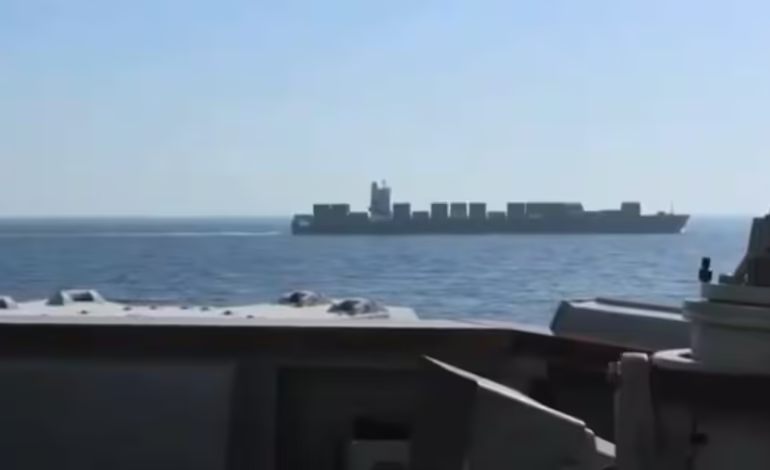
The United States Central Command (CENTCOM) has released new footage showing American naval forces redirecting a commercial vessel during the ongoing Hormuz blockade, highlighting rising military enforcement in one of the world’s most critical maritime chokepoints. The video comes as the broader US-Iran conflict remains in stalemate, with diplomacy moving slowly while military pressure continues in the Gulf region.
What the New Footage Shows
According to reports, the released video shows U.S. Navy personnel aboard a warship communicating with a merchant vessel and ordering it to alter course away from restricted waters linked to the blockade. A sailor can reportedly be heard instructing the ship to discontinue transit toward Iranian-controlled maritime zones.
The footage appears intended to demonstrate that the blockade is being actively enforced through direct maritime interception and radio warnings.
Where This Is Happening: Strait of Hormuz
The incident took place near the Strait of Hormuz, the narrow waterway connecting the Persian Gulf to the Gulf of Oman. It is one of the most strategically important shipping lanes in the world.
Key facts:
- Roughly one-fifth of global oil trade passes through Hormuz
- Major LNG shipments also depend on the route
- Gulf exporters rely on the strait for access to world markets
- Any disruption quickly impacts fuel prices globally
Why the US Is Enforcing a Blockade
The U.S. naval operation reportedly began after failed ceasefire or peace talks with Iran. Washington says the measures are aimed at pressuring Tehran, protecting shipping, and restricting Iranian maritime activity.
Recent reports indicate the blockade includes:
- Naval destroyers and patrol vessels
- Surveillance aircraft and drones
- Maritime warnings to ships
- Redirection of vessels approaching Iranian ports or restricted areas
Iran War Remains in Stalemate
Despite military pressure, neither side appears to have achieved a decisive breakthrough. Reports describe the conflict as a stalemate:
United States Position:
- Maintaining naval and economic pressure
- Seeking concessions through negotiations
- Ready to escalate if needed
Iran Position:
- Resisting external pressure
- Using regional leverage and shipping influence
- Continuing political defiance
This has created a tense pause where neither peace nor full escalation has arrived.
Why CENTCOM Released the Video
Military analysts say releasing footage serves multiple purposes:
- Deterrence – warning ships and adversaries that enforcement is real
- Public Messaging – showing U.S. control and readiness
- Psychological Pressure – signaling continued dominance at sea
- Reassurance – calming allies concerned about shipping safety
Modern conflicts are fought both militarily and through public narrative.
Impact on Global Markets
Every escalation in Hormuz affects world markets. Traders are closely watching the blockade because disruption could lead to:
- Higher oil prices
- Increased shipping insurance costs
- Supply chain delays
- Inflation pressure in importing countries
- Volatility in stock markets worldwide
Even the threat of disruption can move prices sharply.
Risks of Miscalculation
Naval confrontations in narrow waterways carry serious risk. A misunderstanding involving:
- Radio commands
- Merchant vessel navigation
- Fast patrol boats
- Drone surveillance
- Warning maneuvers
could quickly trigger a larger crisis.
That is why the world is watching every ship movement in the region.
What Happens Next
The next phase depends on whether diplomacy resumes successfully. Possible scenarios include:
If Talks Progress:
- Partial easing of blockade
- Safer commercial transit
- Lower oil prices
If Talks Fail:
- Expanded naval enforcement
- More ship interceptions
- Potential military escalation
The newly released CENTCOM footage of a U.S. Navy ship redirecting a vessel near Hormuz shows that the blockade is no longer theoretical—it is being actively enforced. With the US-Iran war stuck in stalemate, the Strait of Hormuz remains one of the most dangerous and economically important flashpoints in the world. Whether this ends in negotiation or escalation may depend on what happens in the coming days.