

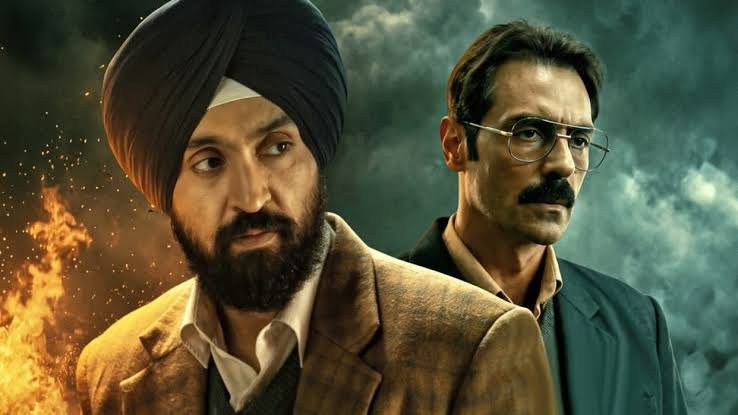
The release of Satluj movie , a film inspired by the life of human rights activist Jaswant Singh Khalra, has triggered one of the biggest political and cultural debates in Punjab in recent years. What was expected to be a historical biographical drama has instead become the center of a nationwide discussion about censorship, freedom of expression, historical memory, and political sensitivities.
Originally developed under the title Punjab ’95, the film faced years of certification hurdles before eventually being released as Satluj. However, the controversy did not end there. Within just 48 hours of its digital release on the ZEE5 streaming platform, the movie was removed in India, reigniting debates about whether governments should control historical narratives or allow audiences to decide for themselves.
What is Satluj about?
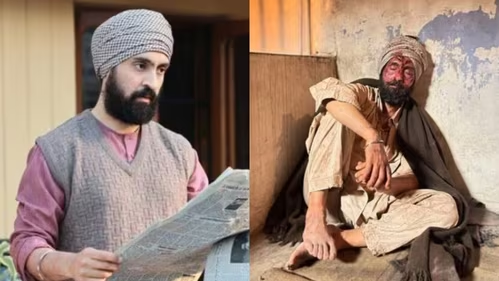
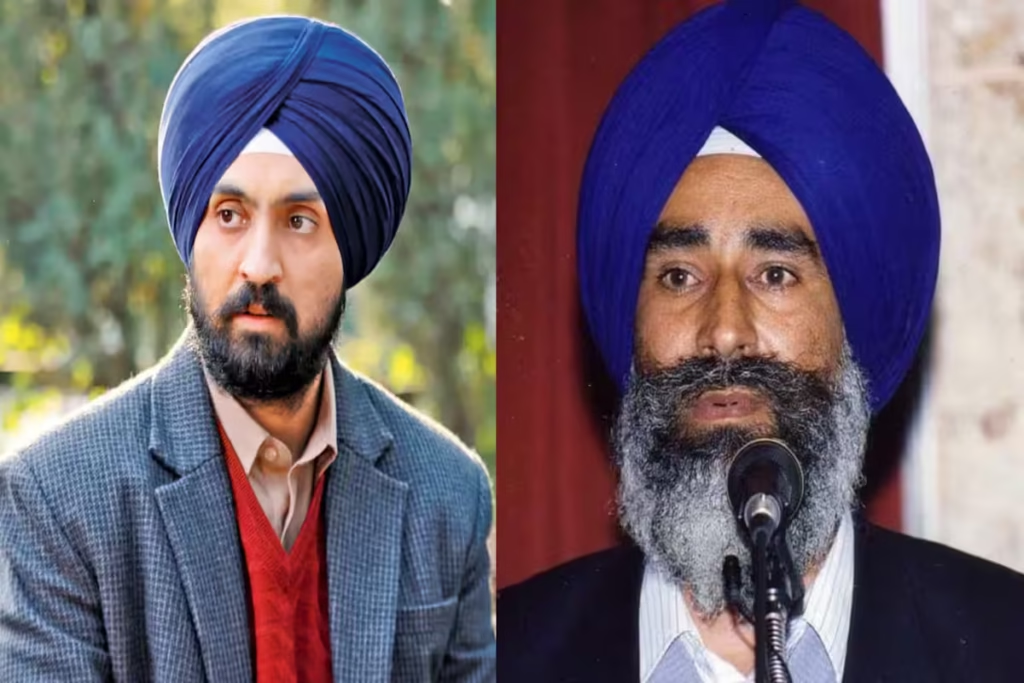
Directed by Honey Trehan and starring Diljit Dosanjh, Satluj tells the story of Jaswant Singh Khalra, a bank manager turned human rights activist who investigated allegations of enforced disappearances and secret cremations during Punjab’s insurgency period in the 1980s and early 1990s.
Khalra documented thousands of cases involving unidentified bodies allegedly cremated without informing families. His investigation brought international attention to the issue before he himself was abducted and later killed in 1995. Years later, several police officials were convicted in connection with his murder.
Rather than presenting fictional events, the film attempts to dramatize this controversial period of Punjab’s history, making it one of the most politically sensitive films produced in recent years.
Why was the film controversial before its release?
The controversy began long before audiences could watch the movie.
Originally titled Punjab ’95, the film reportedly faced extensive objections from India’s Central Board of Film Certification (CBFC). Authorities demanded numerous cuts and modifications, arguing that several scenes could affect public order and national security.
The filmmakers refused to implement the requested changes, leading to a prolonged legal and certification battle that lasted for several years. Eventually, the movie was renamed Satluj, after the river flowing through Punjab, in an effort to move the project forward.
Why was Satluj removed from OTT?
After years of delays, Satluj quietly appeared on ZEE5 in early July 2026.
However, less than two days later, the film disappeared from the platform.
While the streaming platform cited “current developments” as the reason, reports indicated that authorities had raised concerns over the movie’s potential impact on law and order and the possibility that certain scenes could be interpreted in ways that might revive old political tensions.
The sudden removal surprised audiences because the film had already become available for streaming before being taken down.
Why has Punjab’s political class become divided?
The film has exposed deep political divisions across Punjab.
Several Sikh organizations, activists, and opposition leaders argued that Satluj represents an important chapter of Punjab’s history that deserves public discussion. They criticized the removal as censorship and questioned why historical events should be hidden from audiences.
On the other hand, some political leaders expressed concerns that the movie could reopen painful memories of terrorism and violence that affected thousands of families during the insurgency years. They argued that presenting such material without sufficient context could increase social tensions.
As a result, the debate has expanded beyond cinema into broader questions about history, justice, and public memory.
Also Read This Artical :https://onherald.in/assembly-election-results-2026-bjp-sweeps-bengal-congress-returns-in-kerala-tamil-nadu-delivers-hung-verdict/
Community screenings kept the film alive
Despite its removal from OTT platforms, Satluj continued reaching audiences through community screenings.
Several Sikh groups, village organizations, and local communities organized public screenings in gurdwaras, community halls, and open grounds across Punjab. These events attracted people from different generations, including those who had lived through the insurgency and younger viewers who knew little about that period.
Supporters argued that these screenings allowed families to discuss an often-overlooked chapter of Punjab’s history.
Legal challenges have followed
The controversy has also reached the courts.
A Public Interest Litigation (PIL) has been filed seeking restoration of the film on streaming platforms. The petition argues that removing the movie without a clearly explained legal basis undermines constitutional protections for freedom of speech and expression.
The case has added another legal dimension to an already complex political debate.
Why is the debate so significant?
The Satluj controversy is about far more than a single film.
It reflects broader national debates surrounding:
- Freedom of artistic expression
- Government censorship
- Representation of historical events
- Human rights documentation
- Public memory of political violence
- The balance between national security and free speech
Supporters believe the film encourages difficult but necessary conversations about accountability and justice.
Critics argue that sensitive historical subjects must be handled carefully to prevent social unrest or the reopening of old wounds.
Political implications ahead of Punjab elections
The timing of the controversy has also attracted attention.
With Punjab expected to head toward Assembly elections in 2027, several analysts believe debates surrounding Satluj may influence political narratives in the state. Different parties have taken contrasting positions on the film, turning it into an issue extending well beyond cinema and into electoral politics.
Conclusion
The controversy surrounding Satluj demonstrates how films based on historical events can become focal points for wider political and social debates. Whether viewed as an important human rights story, a sensitive historical account, or a politically contentious production, the movie has reignited conversations about Punjab’s past and the limits of artistic freedom in contemporary India.





1 Comment
[…] The Political Storm in Punjab Surrounding ‘Satluj’ Movie […]